
When it comes to moving your vehicle, safety and damage prevention are top priorities. No one wants to deal with the hassle of repairs or extra costs from improper towing. That’s where flatbed towing comes in. This method not only keeps your car secure but also protects it from potential harm during transport. In this article, we’ll break down how flatbed towing prevents damage to your vehicle and why it’s often the best choice for transporting cars of all kinds.
Key Takeaways
- Flatbed towing keeps all four wheels off the ground, reducing wear on tires and suspension.
- This method protects the undercarriage from road debris and environmental factors during transport.
- Vehicles are securely strapped down, minimizing movement and the risk of damage while being towed.
- Flatbed towing is versatile and suitable for all vehicle types, including luxury and low-clearance models.
- It offers peace of mind for long-distance towing, ensuring your vehicle arrives safely at its destination.
Understanding Flatbed Towing Benefits
What Is Flatbed Towing?
Flatbed towing is a method where your vehicle is placed on a flat platform, or bed, that’s mounted on a tow truck. Unlike traditional towing, where some of your car’s wheels are still on the road, flatbed towing lifts the entire vehicle. This ensures no part of your car is dragged, preventing potential damage. It’s a bit like giving your car a lift on a giant, safe platform.
How It Works for Vehicle Safety
With flatbed towing, your vehicle is fully secured to the flatbed. This is important because it keeps your car stable and prevents it from moving around during transport. Think of it as strapping your car into its own personal ride. Because all the wheels are off the ground, there’s no wear and tear on the tires or suspension. Plus, it avoids any potential damage to the undercarriage from bumps or potholes in the road. It’s a much safer way to move your vehicle, especially if it’s a car you really care about.
Key Advantages Over Traditional Towing
Traditional towing methods can sometimes cause more harm than good. With flatbed towing, you get several key advantages:
- Reduced Risk of Damage: Because your vehicle isn’t being dragged, there’s less chance of damage to the tires, suspension, or undercarriage.
- Suitable for All Vehicle Types: Flatbeds can handle everything from small cars to larger trucks and even motorcycles.
- Enhanced Safety: The secure strapping and full elevation of the vehicle minimize the risk of accidents during transport.
Flatbed towing offers a safer and more reliable way to transport your vehicle compared to traditional methods. It minimizes the risk of damage and provides peace of mind, knowing your car is in good hands.
Preventing Wear and Tear on Your Vehicle
Traditional towing methods can sometimes lead to unnecessary wear and tear on your vehicle. Flatbed towing offers a solution to minimize these risks, ensuring your vehicle arrives at its destination in optimal condition. Let’s explore how flatbed towing helps prevent damage.
Eliminating Tire and Suspension Stress
With traditional towing, your vehicle’s tires and suspension can experience significant stress. Dolly towing, for example, lifts only the front wheels, leaving the rear wheels on the road. This uneven weight distribution can cause strain. Flatbed towing eliminates this issue by keeping all four wheels off the ground. This is especially important for all-wheel-drive (AWD) vehicles, where wheel rotation differences can cause damage.
Avoiding Damage to Undercarriage
Vehicles with low ground clearance, such as sports cars or luxury models, are particularly vulnerable to undercarriage damage during traditional towing. Even seemingly minor bumps or potholes can cause scrapes and dents. Flatbed towing completely lifts your vehicle, preventing any contact with the road surface. This is a huge relief if you’re protective of your car’s underside.
Protecting Delicate Components
Beyond the undercarriage, other delicate components like bumpers, spoilers, and exhaust systems are also at risk during traditional towing. Road debris, speed bumps, and uneven surfaces can all cause damage. Flatbed towing provides a secure and elevated platform, shielding these components from potential harm. It’s like giving your car a protective bubble during transport.
Flatbed towing is a proactive approach to vehicle transport. It prioritizes the safety and integrity of your vehicle by keeping it elevated and secure throughout the journey. This method offers peace of mind that traditional towing simply can’t match.
Here’s a quick comparison of potential damage risks:
| Towing Method | Tire/Suspension Stress | Undercarriage Damage | Component Damage |
|---|---|---|---|
| Traditional Towing | High | Moderate to High | Moderate |
| Flatbed Towing | None | None | Minimal |
Protection From External Elements
Shielding Against Weather Conditions
Let’s face it, Calgary weather can be unpredictable. One minute it’s sunny, the next you’re dealing with hail. Traditional towing exposes your vehicle to all of it. Flatbed towing, however, offers a significant advantage. Your vehicle rides safely above the road, shielded from the worst of the elements. Rain, snow, and even that harsh Alberta sun are less of a concern when your car is securely on a flatbed.
Preventing Road Debris Damage
Ever driven behind a gravel truck? It’s not fun. Rocks and debris can cause serious damage to your car’s paint job and undercarriage. With flatbed towing, your vehicle is elevated, minimizing its exposure to these hazards. It’s like giving your car a protective bubble during transport. Think of it as an investment in keeping your vehicle looking its best.
Minimizing Exposure to Environmental Hazards
Road salt, chemicals, and other environmental pollutants can wreak havoc on your vehicle’s finish and components. Flatbed towing reduces this exposure.
By keeping your vehicle off the road, you’re also keeping it away from many of the corrosive substances that can accelerate wear and tear. It’s a simple step that can make a big difference in the long run.
Here’s a quick look at how flatbed towing helps:
- Reduces exposure to road salt.
- Protects against chemical splashes.
- Minimizes the impact of airborne pollutants.
Ensuring Stability During Transport
When you choose flatbed towing, you’re not just getting a ride for your car; you’re investing in its safety during the entire journey. It’s more than just lifting your vehicle onto a flat surface; it’s about making sure it stays put, no matter what the road throws at it. Let’s explore how flatbed towing ensures your vehicle remains stable and secure throughout the transport process.
Secure Strapping Techniques
Flatbed towing relies on specialized strapping systems to hold your vehicle firmly in place. These aren’t your average tie-downs; they’re heavy-duty straps designed to withstand significant force and prevent any unwanted movement. The straps are strategically placed and tightened to distribute the pressure evenly, minimizing the risk of scratches or dents. Think of it as a custom-fit restraint system for your car. The goal is to make sure your vehicle doesn’t shift, bounce, or sway during transit.
Maintaining Vehicle Position
Once your vehicle is secured, maintaining its position on the flatbed is key to preventing damage. Flatbed trucks are designed with features that help keep your car centered and stable. This includes:
- Wheel chocks: These wedges fit snugly against the tires, preventing forward or backward rolling.
- Side rails: These act as barriers, keeping the vehicle from sliding off the sides of the flatbed.
- Strategic placement: The towing operator carefully positions your vehicle on the flatbed to optimize weight distribution and balance.
By keeping your vehicle properly positioned, flatbed towing minimizes the risk of it rubbing against the truck bed or other components, which can cause scratches and other cosmetic damage.
Reducing Risk of Movement
The ultimate goal of flatbed towing is to eliminate any risk of movement during transport. This is achieved through a combination of secure strapping, proper vehicle positioning, and careful driving. Experienced towing operators understand how to navigate turns, bumps, and other road hazards without causing your vehicle to shift or sway. They also regularly check the straps and other securing devices to make sure everything remains tight and in place. This proactive approach minimizes the chance of anything going wrong, giving you peace of mind that your vehicle will arrive at its destination safe and sound.
Versatility for All Vehicle Types
Flatbed towing really shines because it can handle almost any vehicle you can imagine. It’s not just for your everyday sedan; it’s a solution that works across a wide range of vehicles, each with its own unique needs and challenges. Let’s explore how flatbed towing adapts to different vehicle types, ensuring safe and damage-free transport.
Accommodating Luxury and Classic Cars
When it comes to luxury and classic cars, you simply cannot take any chances. These vehicles often have delicate features, sensitive suspensions, and irreplaceable parts. Flatbed towing is the ideal choice because it keeps the entire vehicle off the road, eliminating any risk of damage from bumps, debris, or uneven surfaces. Traditional towing methods can cause undue stress and potential harm, but with a flatbed, your prized possession is cradled securely for the entire journey.
Transporting Heavy and Specialty Vehicles
Flatbed trucks aren’t just for fancy cars; they’re workhorses capable of hauling heavy and specialty vehicles too. Whether it’s a large SUV, a work van loaded with equipment, or even a smaller piece of construction machinery, a flatbed can handle the load. The key is the flat, stable platform and the secure strapping systems that prevent any shifting or movement during transport. This is especially important for vehicles with a high center of gravity or unusual dimensions.
Ideal for Low-Clearance Models
Low-clearance vehicles, like sports cars with ground-hugging designs, often face challenges with traditional towing. The risk of scraping the undercarriage or damaging the front bumper is very real. Flatbed towing eliminates this risk entirely. Because the vehicle is lifted onto the flatbed, there’s no need to worry about ramps, angles, or any contact with the road surface. This makes flatbed towing the go-to option for anyone with a low-rider or a vehicle with limited ground clearance.
Flatbed towing’s versatility extends beyond just the type of vehicle. It also simplifies the process for vehicles that are damaged, have flat tires, or are otherwise not roadworthy. Instead of trying to fix the issue on the spot or risk further damage by dragging the vehicle, a flatbed provides a safe and easy way to transport it to a repair shop.
Safety Measures in Flatbed Towing
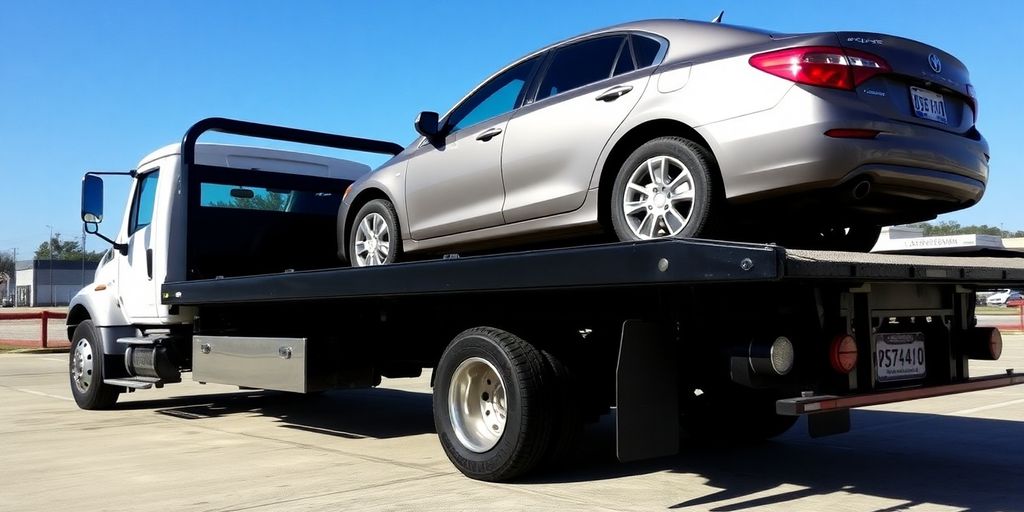
Flatbed towing isn’t just about getting your car from point A to point B; it’s about doing it safely. You want to be sure your vehicle arrives in the same condition it left, right? That’s where the safety measures in flatbed towing really shine. Let’s take a look at what makes this method so secure.
Professional Equipment and Techniques
When it comes to flatbed towing, the equipment matters. We’re talking about well-maintained flatbeds, heavy-duty straps, and the right tools for the job. Professional towing companies invest in this equipment to ensure your vehicle is handled with care. It’s not just about having the gear, though; it’s about knowing how to use it.
Training for Towing Operators
It’s easy to think anyone can drive a tow truck, but that’s not the case. Properly trained towing operators are essential for safe flatbed towing. They understand the physics involved, how to properly secure different types of vehicles, and how to react in various situations on the road.
- Proper loading and unloading procedures.
- Safe driving techniques with a vehicle in tow.
- Emergency response protocols.
Best Practices for Secure Transport
Secure transport is more than just strapping a car to a flatbed. It involves a whole set of best practices that experienced operators follow. This includes:
- Inspecting the vehicle before loading to note any existing damage.
- Using the correct strapping points to distribute weight evenly.
- Regularly checking the straps during transport, especially on long trips.
Following these best practices minimizes the risk of any movement or damage during transit. It’s about taking a proactive approach to safety, not just reacting to problems as they arise.
By choosing a company that prioritizes these safety measures, you’re investing in the well-being of your vehicle and gaining some peace of mind.
Long-Distance Towing Advantages
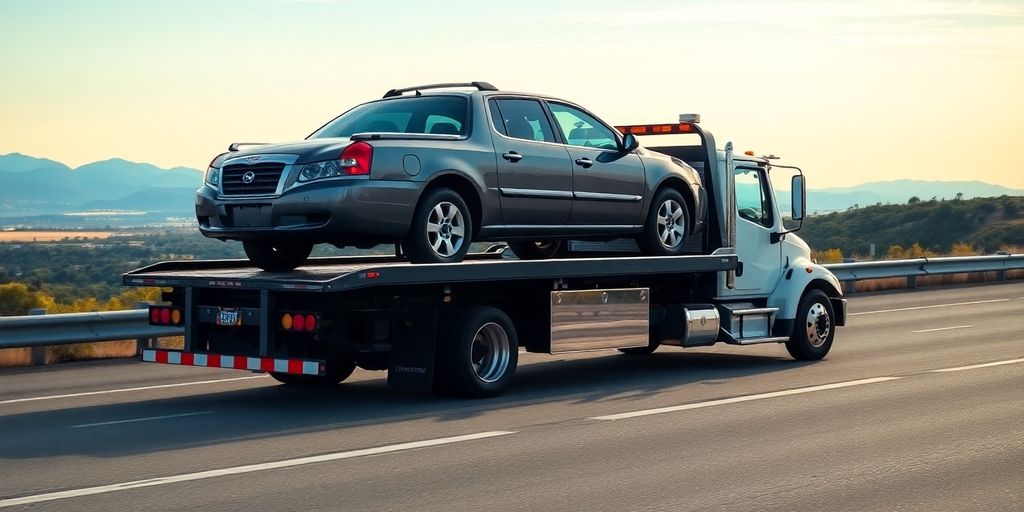
Maintaining Vehicle Integrity Over Distance
When you’re facing a long haul, the last thing you want is for your vehicle to suffer more wear and tear. Traditional towing methods can put unnecessary stress on your car’s components, especially over hundreds of miles. Flatbed towing, however, keeps all four wheels off the ground, preventing any additional mileage or strain on the engine, transmission, and tires. This is especially important for preserving the integrity of classic or luxury vehicles.
Reducing Risk of Damage During Transit
Think about all the things your car could encounter on a long trip: potholes, debris, and uneven road surfaces. With standard towing, these hazards can translate directly into damage. Flatbed towing minimizes these risks by securing your vehicle on a stable platform, far from the bumps and scrapes of the road. It’s like giving your car a first-class ride, ensuring it arrives in the same condition it left.
Peace of Mind for Vehicle Owners
For many, a car is more than just a way to get around; it’s an investment, a source of pride, or even a family heirloom. Entrusting it to someone for long-distance transport can be stressful. Flatbed towing offers peace of mind. Knowing your vehicle is safely secured and protected from the elements allows you to focus on other aspects of your move or transport, confident that your car will arrive safe and sound.
Choosing flatbed towing for long distances is not just about convenience; it’s about protecting your investment and ensuring a worry-free experience. It’s a small price to pay for the assurance that your vehicle will arrive at its destination in top condition.
Here’s a quick comparison to illustrate the benefits:
| Feature | Flatbed Towing | Traditional Towing |
|---|---|---|
| Wheel Contact | None | Partial |
| Risk of Road Damage | Minimal | Higher |
| Vehicle Security | High | Moderate |
| Peace of Mind | High | Lower |
Consider flatbed towing for your next long-distance transport. It’s the smart choice for protecting your vehicle and ensuring a smooth, stress-free experience.
When it comes to long-distance towing, there are many benefits that can make your life easier. For one, it allows you to transport your vehicle safely over great distances without worrying about breakdowns. Plus, professional towing services have the right equipment to handle your vehicle properly, ensuring it arrives in good condition. If you want to learn more about how long-distance towing can help you, visit our website today!
Final Thoughts on Flatbed Towing
In the end, flatbed towing is really the way to go if you want to keep your vehicle safe during transport. By lifting all four wheels off the ground, it protects your car from wear and tear that can happen with other towing methods. Plus, it keeps your vehicle secure and stable, which is especially important for high-end or delicate cars. So, next time you need to tow your vehicle, consider flatbed towing. It’s a smart choice that can save you from future headaches and repair costs. Trust me, your car will thank you!
Frequently Asked Questions
What is flatbed towing?
Flatbed towing is a method where a vehicle is loaded onto a flat, level platform on a tow truck. This keeps all four wheels off the ground during transport.
How does flatbed towing protect my vehicle?
Flatbed towing prevents wear and tear by eliminating stress on the tires and suspension, as the entire vehicle is lifted off the ground.
Is flatbed towing better than traditional towing?
Yes, flatbed towing is generally safer because it avoids potential damage to the undercarriage and delicate parts of the vehicle.
Can flatbed towing be used for all types of vehicles?
Absolutely! Flatbed towing can accommodate a wide range of vehicles, including luxury cars, motorcycles, and even heavy trucks.
What safety measures are taken during flatbed towing?
Professional tow companies use secure straps and anchors to keep the vehicle in place, ensuring it doesn’t move during transport.
Is flatbed towing suitable for long distances?
Yes, flatbed towing is ideal for long-distance transport as it maintains the vehicle’s integrity and reduces the risk of damage.