
Maximum Weight Allowed on a Flatbed Truck: Safety Guidelines and Regulations
Understanding the maximum weight allowed on a flatbed truck isn’t just about avoiding fines—it’s about ensuring everyone’s safety on the road. For any truck driver, knowing how much their vehicle can legally carry means peace of mind during long hauls. Researching this carefully involves diving into both federal guidelines from the FMCSA and varied state-specific rules which can sometimes offer unexpected variations.
While most are aware that the federal limit is set at 80,000 pounds, details like how individual states such as Alberta tweak these numbers based on axle configurations can catch many by surprise. Our guide draws from extensive examination of these regulations to provide clear answers, helping you stay compliant whether you’re navigating urban highways or provincial roads.
The maximum weight allowed on a flatbed can vary depending on the specific type of flatbed trailer and local regulations. As a general rule, standard flatbed trailers can typically carry loads up to 48,000 pounds, but it’s important to check with your local authorities and towing professionals for accurate weight limits and regulations.

Federal and State Weight Regulations
Let’s unravel the intricate regulatory framework governing the weight limits of flatbed trucks. The Federal Motor Carrier Safety Administration (FMCSA) is a focal point, setting the maximum allowable weight for commercial vehicles on interstate highways. According to FMCSA guidelines, the maximum gross vehicle weight (GVW) allowed is 80,000 pounds, encompassing not only the truck and trailer weight but also cargo and passengers. This adherence to federal regulations is crucial for promoting safety and efficiency on roadways.
Beyond federal standards, individual states have additional or complementary regulations tailored to their circumstances. These state-specific variations encompass rules related to vehicle types and axle configurations, influencing how much weight can be legally transported within those jurisdictions. For example, in Alberta, maximum weight limits can vary depending on the type of vehicle and number of axles.
The interplay between federal and state-specific regulations necessitates a deep understanding of not just general guidelines but also those stipulated by individual states. This ensures that companies like Calgary Towing Truck are competent in navigating complex weight regulations while maintaining legality and the highest safety standards in their operations.
It’s evident that staying abreast of these regulations is non-negotiable in the world of transportation services. By adhering to both federal and local weight regulations, Calgary Towing Truck upholds its commitment to safe and legal towing practices while ensuring complete compliance with all relevant laws—both at national and local levels.
In this intricate web of rules, knowledge reigns supreme. Understanding both federal and state-level regulations is fundamental. Now let’s turn our attention to explore the nuances of another critical aspect—maximum legal cargo weights.
Maximum Legal Cargo Weight
The maximum legal cargo weight for a flatbed truck is influenced by several factors, including the number of axles and the design of the truck itself. These specialized features determine the load-bearing capacity and influence the total weight that can be safely transported on a flatbed truck, typically ranging from 48,000 to 50,000 pounds.
In essence, when determining the cargo weight for a flatbed truck, it’s crucial to consider both federal and state regulations for commercial vehicles, especially when transitioning goods across provinces or states, as each may have unique requirements. At Calgary Towing Truck, our primary focus is ensuring efficient and secure transportation within these legal limits while accommodating various weights. Our flatbed services are tailored to adhere to these specifications with precision, whether handling heavy machinery or cumbersome equipment.
Adhering to legal cargo weight limits isn’t just about following rules; it’s also critical for maintaining road safety and preserving vehicle integrity
Understanding the legal cargo weight for flatbed trucks is complex; it demands comprehensive knowledge of regulations and careful consideration of the vehicle’s structural capacity. Overloading a flatbed can lead to structural strain, compromising its ability to navigate roads safely. Additionally, it significantly affects braking distances and makes handling more challenging, posing potential hazards for all road users.
At Calgary Towing Truck, we recognize the importance of aligning with these cargo weight regulations not only from a regulatory perspective but also as a fundamental principle of responsible and reliable hauling services.
Now let’s dive into strategies for safely optimizing cargo weight without compromising vehicle safety.
Axle and Tire Load Limits
When it comes to flatbed trucks, understanding axle and tire load limits is crucial for ensuring safety and compliance with regulations. The guidelines from the Federal Motor Carrier Safety Administration (FMCSA) clearly state that the weight on any single axle should not exceed 20,000 pounds. Similarly, the weight on any tandem axle should not exceed 34,000 pounds. These figures are in place to prevent wear and tear on the vehicle, ensure road safety, and protect the integrity of your cargo.
Exceeding these limits can lead to severe issues such as damage to the truck’s suspension, braking systems, tires, and steering components. It can also wreak havoc on road surfaces through unnecessary stress and friction. For instance, a truck that bends the rules on weight limits is like an overpacked backpack—it can damage your back over time.
Calgary Towing Truck is passionate about maintaining adherence to these safety guidelines. Regular maintenance checks are conducted to ensure that all trucks within their fleet comply with these important standards.
Moreover, the limits are not arbitrary figures but informed by extensive research. For example, the FMCSA assessed countless miles of roadways and various vehicles to determine weight thresholds for optimal safety.
Similarly, tire load limits are a critical aspect not to be overlooked; they’re usually marked directly on the tire itself. Overloading tires can cause them to overheat and wear out faster than expected, potentially causing accidents. By ensuring that all tires are within their load capacities through regular maintenance checks and enforcing adherence to these limits, Calgary Towing Truck upholds impeccable safety standards for every journey.
Adhering to axle and tire load limits isn’t just about following regulations; it’s about prioritizing safety for everyone on the road.
Ensuring Proper Load Distribution
When it comes to flatbed trucks, how you place the cargo is just as critical as the weight itself. The placement of the load directly impacts the truck’s balance and stability. Uneven distribution of weight can lead to imbalanced center of gravity, heightening the risk of accidents.
Step I – Centering the Load
Placing the heaviest items in the center of the flatbed, right over the axles, is crucial for balancing the vehicle’s weight evenly. It’s vital to avoid loading too much weight towards the front or back, as this can unbalance the truck. Centering the load over the axles prevents sharp turns from causing instability.
Step II – Securing the Cargo
In addition to proper placement, securing the cargo with appropriate restraints like chains and straps is essential. This doesn’t just prevent shifting during transport but also helps maintain a safe and stable load distribution. Adequate restraints reduce the risk of imbalance and keep heavy items secure, avoiding sudden shifts during transportation.
Step III – Checking Weight Distribution
Regularly measuring and checking that the weight is evenly spread across all axles is a good practice. This ensures there are no significant imbalances that may compromise vehicle handling and safety. An uneven weight distribution places excessive pressure on certain areas of the truck, leading to wear and tear over time. Monitoring weight distribution consistently allows truck operators to identify and address potential hazards before they become problematic.
Calgary Towing Truck excels in implementing these proper load distribution techniques. Their commitment to maintaining balanced and safe cargo placement enhances the overall safety, efficiency, and integrity of every haul.
Proper load distribution promises not only a safer journey but also safeguards against potential risks associated with imbalanced cargo on flatbed trucks. It’s undoubtedly an essential practice for ensuring efficient and secure transport.
Safety Protocols for Flatbed Truck Transport
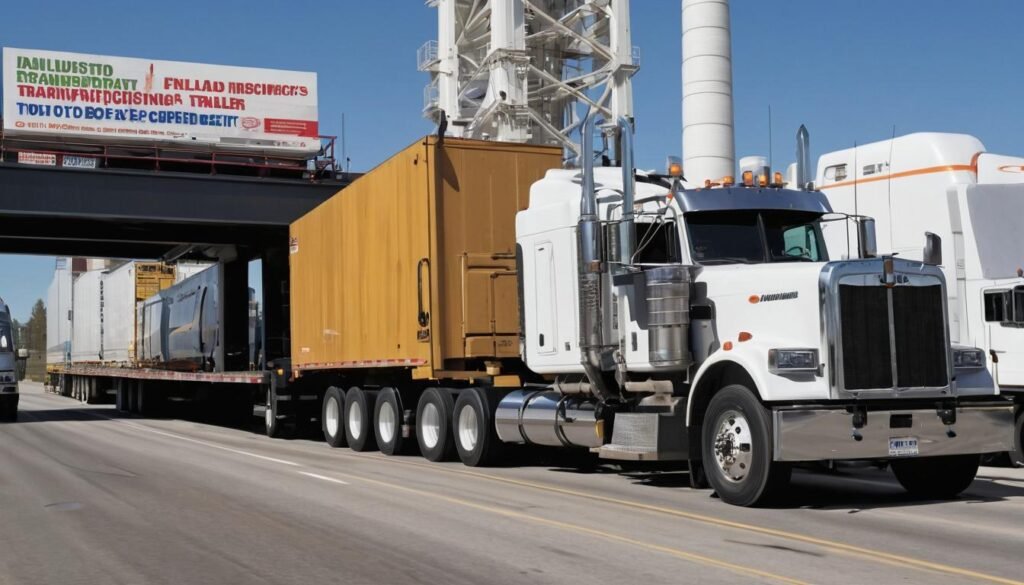
Adhering to a stringent set of safety protocols is crucial when taking on the responsibility of transporting goods via flatbed trucks. Each regulation plays a role in ensuring that every journey is secure for both the cargo and everyone involved in its transport. Let’s explore some essential guidelines for a safe flatbed truck transport:
Pre-Trip Inspections
Before beginning each trip, conducting thorough vehicle inspections is crucial. This includes carefully examining the brakes, tires, lights, and other essential components. Going through this checklist before every trip helps to identify and address potential issues or hazards promptly, significantly enhancing road safety.
Additionally, using a standardized inspection checklist can help drivers meticulously assess all aspects of the flatbed truck, minimizing the risk of critical oversights. Regular pre-trip inspections are fundamental in preventing accidents resulting from overlooked mechanical failures or malfunctions.
Use of Safety Gear
The importance of personal protective equipment (PPE) cannot be overstated when working with heavy machinery like flatbed trucks. Operators must ensure they are equipped with appropriate PPE including gloves and reflective vests. These measures significantly reduce the risk of injury during loading and unloading operations and enhance visibility, especially in low-light conditions or high-traffic areas.
Adherence to Speed Limits
Maintaining recommended speeds, particularly when transporting heavy loads, is crucial for safeguarding both the cargo and other road users. Excessive speed can lead to reduced maneuverability and increased stopping distances, heightening the risk of accidents. Adhering to specified speed limits ensures safe transit while mitigating potential risks associated with carrying heavy freight.
Calgary Towing Truck prioritizes these rigorous safety protocols to uphold reliable and secure towing services. By strictly adhering to pre-trip inspections, promoting the use of safety gear, and maintaining prescribed speed limits, we ensure maximum safety and security during flatbed truck transport operations.
Obtaining Permits for Oversized Loads
When it comes to transporting extra-large or heavy cargo, specific rules and regulations are in place to guarantee safety on the road. An oversized load typically exceeds certain dimensions or weight limits, necessitating special permits to remain compliant with local and regional laws.
When Permits are Needed
Let’s clarify when an oversize or overweight permit is required. These permits are typically needed when:
- The load exceeds the maximum weight limit.
- The load surpasses particular dimensions such as width, height, or length.
- The overall size of the vehicle and cargo doesn’t meet standard legal requirements.
In Alberta, acquiring these specialized permits involves providing comprehensive details about the load, chosen route, and vehicle specifications. This ensures that authorities can assess whether the proposed transportation plan conforms to safety standards and traffic management guidelines.
The process of obtaining a permit involves careful planning and adherence to specific logistical aspects—meticulous details that must be diligently accounted for to ensure a smooth and safe journey.
Permit Application Process
The permit application process generally includes:
- Detailed Submission: Submitting comprehensive documentation about the load, including its weight, dimensions, and the specifics of the route being taken.
- Fee Payment: Depending on the nature of the cargo and distance being covered, there may be associated fees related to securing an oversized load permit.
- Approval Timeframe: Once the application has been submitted along with the required fees, it’s a waiting game. Approvals can take a few days to come through as authorities carefully review each detail before granting their consent.
Given these protracted procedures involved in obtaining permits for heavier or outsized cargo movements, companies often rely on skilled professionals like Calgary Towing Truck to make these arrangements. Their expertise helps businesses steer clear of regulatory hurdles and ensures they can focus on core operations while their transportation needs are efficiently managed.
Calgary Towing Truck’s experience in handling oversized loads makes them well-versed in all aspects related to permit acquisition. They aim to secure all necessary permissions in time for safe and efficient transport, maintaining compliance with regulations throughout the entire process.
Understanding when permits are needed and how they are obtained provides important insight into the intricate process of transporting oversized loads. Now let’s dive further into safety measures specifically linked to securing these permits effectively.
Navigating the regulations surrounding oversize load transport can be complex but with thorough understanding and professional help, compliance becomes achievable.